Web Stories
From Failed Harvests To Forced Marriages: The Quiet Crisis Unfolding Behind South Asia’s Delayed Monsoon


There is an old saying in parts of rural India: the monsoon is God’s mood. When it arrives on time, fields turn green, debts shrink, and daughters stay in school. When it’s late or too violent, everything unravels. Crops fail, savings vanish, and in too many villages, people start calculating which of their children they can least afford to keep. Almost always, the answer is a girl child. Climate change is already occurring, and its consequences are already manifesting. But scientists, aid workers, and researchers are increasingly connecting climate change to a disturbing rise in child marriage. Shockingly, in recent years, climate change has emerged as one of the biggest reasons for child marriages.
The monsoon is changing, and so is the life of plenty of girls
For most of human history, the South Asian monsoon arrived with reassuring regularity, somewhere between late May and early June. Farmers timed everything to it, governments built reservoirs around it, and entire economies depended on its punctuality. However, that punctuality has vanished.
A landmark paper published in late 2025 titled Variability in Indian Monsoon Onset: Delays, Advances, and Regional Disruptions shows us a harsh reality. The decades of data have concluded that delayed monsoon onset, erratic progression, false starts, and prolonged dry spells are becoming defining features of India’s climate. The authors found that climate change is altering not just how much rain India receives, but when and how it arrives. This shift has grave consequences for a country where seasonal rainfall deeply ties agriculture, water security, and rural livelihoods.
A comprehensive review in ScienceDirect (2025) covering India, Pakistan, Bangladesh, Sri Lanka, Nepal, Bhutan, and the Maldives found that monsoon irregularity has increased sharply in recent decades, with a worrying phenomenon called “whiplash events”. During this phenomenon, communities swing abruptly from severe drought to catastrophic flooding within the same season.
A May 2026 analysis by World Weather Attribution found that pre-monsoon heat in India and Pakistan is exposing hundreds of millions of people to conditions that would have been impossible without human-caused climate change.
The economics of disaster and who pays the price
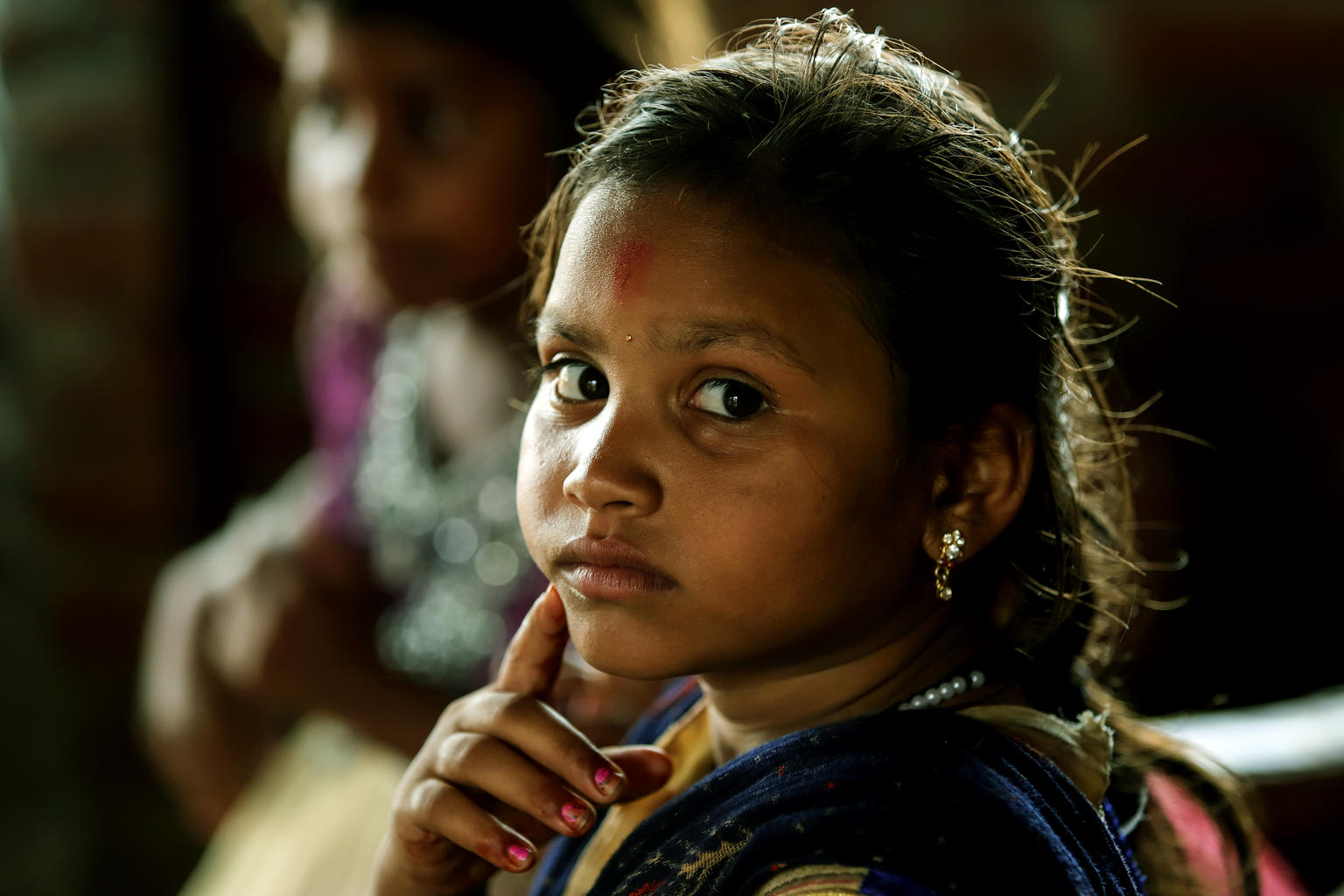
To understand why climate change can be a reason for child marriage, you need to understand what climate-induced poverty does to a family’s calculus. Agriculture accounts for the livelihoods of hundreds of millions of people across South Asia and Sub-Saharan Africa. When the rains fail, harvests collapse. When the rains come too violently, they drown standing crops. For a family already living close to the margin, one failed harvest turns into a crisis. Savings are exhausted, debt accumulates, and children are pulled from school because fees can’t be paid. And in communities where a price is paid to the girl’s family upon marriage, which is common across West, Central, East, and Southern Africa, a daughter’s marriage becomes a financial transaction that can keep the rest of the family alive.
UNICEF has stated that in times of instability or economic hardship, families may resort to child marriage as a source of income or to reduce the number of children they must feed, clothe, and educate. It is a desperate, heartbreaking logic. And climate change is making it more common.
The number that explains everything
Here is the single most important statistic in this story: for every 10 per cent deviation in rainfall due to climate change, child marriage rates increase by approximately 1 per cent. That figure, cited by both UNICEF and the Girls Not Brides network, might sound small. But consider the scale. Two billion people live in the South Asian monsoon zone. Hundreds of millions more in Africa depend on seasonal rains for their livelihoods. A 1 per cent increase across those populations translates to tens of thousands of additional girls married off before they turn 18. UNICEF confirmed it in a 2023 global analysis, noting that extreme weather events driven by climate change directly increase a girl’s risk of child marriage and that girls in fragile settings are twice as likely to become child brides as the global average.
The relationship between climate shocks and child marriage is not uniform, though. Research by Girls Not Brides found a crucial cultural split. In much of Sub-Saharan Africa, where bride price is the norm, environmental crises tend to increase child marriage as families seek income. In much of South Asia, where dowry is customary, the dynamic is more complex, and economic devastation can sometimes delay marriages by making dowry payments impossible. But even in South Asia, disasters like the 2024 Wayanad landslides in Kerala led to documented spikes in child marriage as orphaned and displaced girls became especially vulnerable.
Schools close and girls don’t come back

One of the most direct pathways from climate disaster to child marriage runs through the schools, or rather, their closure. In January 2025, UNICEF released a landmark analysis showing that at least 242 million students in 85 countries had their schooling disrupted by extreme climate events in 2024 alone. South Asia was the worst-affected region, with 128 million students facing climate-related school disruptions. This matters because education is one of the most powerful protections a girl has against early marriage. For girls, the likelihood of being married as a child substantially reduces with every additional year of secondary school she completes. When schools close, even temporarily, girls mostly don’t return; they are absorbed into household labour, farm work, or marriage.
UNICEF is explicit about the stakes. In fragile contexts, prolonged school closures make it less likely for students to return and place girls at heightened risk of child marriage, child labour, and gender-based violence during and after disasters. By 2025, climate change had already caused at least 12.5 million girls in 30 low and lower-middle-income countries to leave school entirely.
From Kerala to Kenya, climate change is the reason for child marriages
The 2024 Wayanad landslides in Kerala, India, triggered by extreme monsoon rainfall, killed more than 400 people and displaced thousands. In the aftermath, child protection advocates documented a disturbing pattern. With families destroyed and girls orphaned or left without guardians, child marriage cases rose. Kerala officially recorded 18 child marriages in the year to mid-January 2025, up from 14 the previous year and 12 the year before.
Thousands of kilometres away, in the Horn of Africa, a different kind of climate disruption was producing the same outcome. As a multi-year drought driven by climate change dried up water sources and killed livestock, UNICEF documented what it called “alarming rates” of child marriage across Ethiopia, Kenya, and Somalia. Families were marrying off girls as young as twelve, sometimes to men five times their age. This was done to secure bride prices, reduce household food burden, or move daughters into what they hoped would be better-off households.
Long-term climate stress, like sustained drought, repeated flooding, and progressive livelihood erosion, has a larger impact than single extreme events. A family that has lost three consecutive harvests to erratic monsoon rains is far more vulnerable than one hit by a single flood and then recovered.
Why girls specifically and why now

Child marriage is not exclusively a girls’ issue, but it is overwhelmingly girls who bear the burden. And climate change is a profoundly gendered crisis. Women and girls in low-income agricultural communities are often already more economically marginalised and more dependent on family and social structures for their security. When those structures are disturbed by disaster, they are the first ones to be affected.
Disaster displacement concentrates vulnerable people in camps and temporary shelters. Research consistently shows that gender-based violence rises in these environments. Families, desperate to protect daughters from perceived threats, sometimes turn to early marriage as a protective strategy. The consequences for the girls themselves are severe and well-documented. Child marriage is associated with dropping out of school, intimate partner violence, complications in pregnancy and childbirth, poor infant health, and a lifetime of reduced autonomy and economic opportunity. It is, as international law recognises, a fundamental violation of human rights, and climate change is driving it upwards.
What would actually help
The good news is that both climate adaptation and child marriage prevention are areas where targeted intervention works. The UNFPA–UNICEF Global Programme to End Child Marriage reached over 7 million girls with life skills and education in 2025 alone. And nearly 10 million were supported to stay in or return to school.
But experts argue that the two crises — climate change and child marriage need to be tackled together, not separately. Girls Not Brides hosted a major research summit on the issue in early 2025. It called for cross-sectoral interventions that connect climate action with child protection and for strengthening social protection systems so that families have real alternatives to early marriage when disasters hit.
Keeping girls in school during and after climate disasters is especially critical. Conditional cash transfers, disaster-responsive school feeding programmes, and remote learning options during closures have all shown promise. Legal frameworks matter too. India has strong laws against child marriage. However, analysts have noted that these do not yet integrate climate adaptation strategies. This leaves a gap in preventive frameworks precisely when and where they are most needed.
Climate change is not an abstract future threat. For millions of girls, it is already here, reshaping the conditions that determine whether they will go to school or get married off. The two crises — a warming planet and the practice of child marriage are now deeply entangled. Addressing one without addressing the other is simply not enough.
Featured Image Source
More from All About Eve
The Research Is In: Salaries Drop When Women Start Dominating A Workforce Sector
Sugar-Coated Sexism: AI Fruit Videos Are Colourful, Entertaining, And Deeply Sinister
40 Men In 3 Hours: What Happened When A Cop Disguised Herself As An Ordinary Woman At Night
India’s Gig Economy Is Booming But Not For Women: Why Are India’s Gig Platforms Still A Man’s World?
The Price Of Being A Woman: Women Pay 20% More To Simply Exist In India
- Share:
-

-

-