Web Stories
Reality Shows In 2026 Could Be The End Of India’s Obsession With Saas-Bahu Soaps

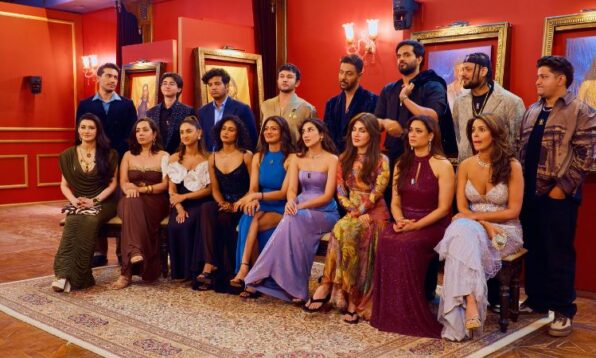
For years, Indian television followed a set pattern, and it worked. Monday to Friday belonged to the saas-bahu universe. Reality TV, meanwhile, was the weekend indulgence. Something louder and occasionally ridiculous to watch before Monday came around. Back then, saying you loved watching Bigg Boss was guaranteed to draw frowns. However, that doesn’t hold for 2026. Today, reality TV shows are everywhere, and everyone is watching at least one. From Bigg Boss and Khatron Ke Khiladi to Indian Idol, The Traitors, Shark Tank India, and Alliance, reality formats have become wildly popular.
Why is everybody suddenly obsessed with reality shows?
A decade or so ago, daily soaps were the guaranteed format to get TRPs, but in 2026, they are not the only promising format. Reality TV in India has finally figured out exactly what audiences want in 2026. The biggest advantage reality TV has over the daily soap is that it does not ask you to believe in another world. Daily soaps are built on heightened reality. People live in enormous houses, villains have unlimited free time, weddings last several weeks, and one family can survive enough betrayals to fill a small history textbook. The exaggeration is part of the pleasure, but it also creates distance.
However, reality television operates differently. Even when it is heavily produced, it sells itself through the promise of authenticity. The contestants are not presented as celebs but rather real human beings living their everyday lives. Their fights can spill onto Instagram, and we are all collectively dissecting what someone should actually do in that situation. When it comes to reality TV, contestants’ personalities become the story.
The audience does not just watch anymore

A daily soap traditionally gives viewers a story to follow. Reality television gives them a side to take. Who deserved to win? Who was fake? Was that argument genuine? Did the contestant overreact? Should the judge have eliminated them? Who is secretly flirting with whom? These are not questions that end when the episode does. They migrate to Instagram Reels, YouTube clips, Reddit threads, fan accounts, and group chats.
This is where reality television has an enormous advantage. We live in an era when audiences are increasingly accustomed to watching real people online. Social media has made personality itself a form of entertainment. Reality television simply brought that logic back to the television screen.
A dramatic soap episode can certainly go viral, but its conversation usually revolves around the plot. Reality TV creates conversation around real people. And people are much easier to turn into internet personalities, fandoms, and eventually, brands.
Daily soaps have a repetition problem
The problem with the daily soap is not necessarily that audiences have stopped liking drama. It is that they have become much harder to surprise. The basic grammar of the Indian soap is more or less the same: marriage, betrayal, revenge, inheritance, pregnancy, misunderstanding, reunion, separation, another marriage, and occasional rebirth. Even when the characters change, the emotional machinery often remains the same. And because soaps need to produce enormous amounts of content, repetition is almost inevitable.
Reality television has its own formulas, of course. There will always be the villain edit, the underdog, the comic relief, and the contestant who cries in the confession room. But the variables are human beings. Put a different group of personalities in the same house or competition and the chemistry changes. That unpredictability is becoming increasingly valuable when audiences have become accustomed to algorithms serving them something new every few seconds.
The economics make sense too
There is also a simple and obvious reason: money. Reality formats can attract broader demographics than the traditional soap audience, including male viewers and younger audiences. That makes them attractive to advertisers looking beyond categories traditionally associated with female television audiences. The Economic Times reported in January that Hindi general entertainment channels were increasingly turning towards reality programming partly to diversify their audience and monetisation opportunities.
Reality shows come with something advertisers love: integration opportunities. A fictional character drinking a coffee feels like an advertisement. A contestant actually cooking with a brand or celebrity using a product during a challenge can become part of the programme’s world.
The influencer economy has changed television
Perhaps the most important reason reality TV feels unusually suited to 2026 is that television and social media are no longer separate entertainment industries. The influencer economy has trained audiences to follow people rather than formats. We watch someone’s daily routine, opinions, relationships, breakdowns, and glow-ups because the person has become the narrative. Reality television has effectively adopted that model.
This is why the modern reality contestant can become more valuable than the traditional fictional protagonist. The show becomes one chapter in a much larger content ecosystem.
Proof that reality TV in India is having a moment in 2026
Perhaps the strongest argument for reality TV’s adaptability comes from what is happening on streaming. For years, OTT was positioned as an alternative to television. Streaming meant dark and raw stories, international shows, and binge-worthy fiction. But the stats tell a different story. Khatron Ke Khiladi 15 topped Ormax StreamView’s list of India’s most-watched OTT shows for the week of August 3-9, 2026, attracting an estimated 5.8 million viewers. It beat Netflix’s latest release, Operation Safed Sagar. It even finished ahead of long-running favourite Taarak Mehta Ka Ooltah Chashmah.
Ormax’s analysis of The 50, another social-reality format, found that the show reached more than 13 million unique viewers across its seven-week run and consistently ranked as the second most-watched streaming property in India, behind the ICC Men’s T20 World Cup.
So, it’s not about who’s winning between reality TV and daily soaps. It’s about relevance, and reality TV looks like it will remain relevant in the ever-changing entertainment industry.
Featured Image Source
More from All About Eve
The Emraan Hashmi Era Is Back: 8 Movies That Prove He’s Always Been A Star
Awarapan 2 Review: The Sequel Makes You Revisit The Heartbreak, Music, And Magic Of Awarapan
Crimes That Shook India: 10 Indian True Crime Series Like Raakh That Will Leave You Unsettled
- Share:
-

-

-