Web Stories
I Was Always My Father’s Daughter, But Now I Reserve All My Love For My Mother

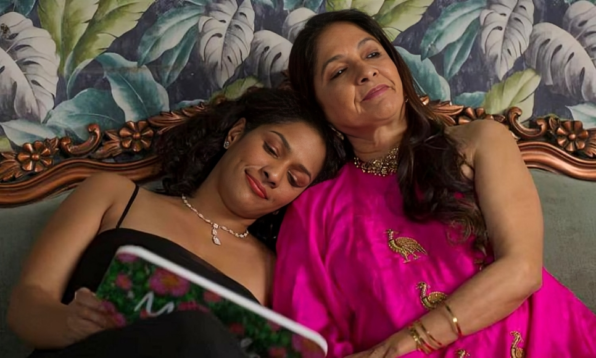
At some point in our teens, we start dismissing our mothers for one reason or another. I did the same. I decided my dad was the interesting one. He had opinions about politics, made jokes at the dinner table, and knew things about history. My mother, meanwhile, managed the house, reminded me about homework, and told me what to do and what not to. So it felt natural to label her as the problem, a joy-killer. I don’t think I’m alone in this. I’ve seen it everywhere: teenagers and women in their early 20s being rude, sharp, and dismissive towards their mothers. Not because their mothers weren’t present — if anything, they were the most present — but because somewhere along the way, we absorbed the idea that presence isn’t the same as substance.
Why do daughters reject their mothers?

The way many Indian households function, fathers are slightly removed from the daily grind. They’re busy, tired, or simply not the ones managing logistics. Which means when they sit down for a conversation, take you out, offer an opinion, it lands. It feels intentional, even special.
Mothers, on the other hand, are always there. Packing the dabba, tracking schedules, noticing when something is off before you’ve said a word. And somehow, that constancy gets flattened into ordinariness. We treat availability like an obligation. We don’t register the effort it takes to be available all the time.
What I realised, embarrassingly late, is that my mother is sharp. Not in a performative, dinner-table-debate way, but in ways that actually matter. She reads people quickly, remembers details no one else does. Understanding intricate dynamics is her superpower. She just never had the time, or the audience, to package those observations into something that would be recognised as “intelligent”.
A lot of this comes down to what we’re trained to find impressive. Ambition is visible, so we respect it. Speaking loudly, having opinions, and occupying space are all coded as intelligence. The work of running a household, managing relationships, and keeping everyone functional gets coded as expected and unremarkable. But that’s a very effective con. The person doing the most sustained, complex emotional and logistical labour in the house is also the one we’re least likely to sit down and actually listen to.
How to mend your relationship with your mother
This wasn’t a dramatic awakening. There was no single moment that changed everything. But as I read more about feminism, about labour, about whose work gets counted, I kept recognising patterns. The way my mother handled her in-laws. The deliberate choices she made while raising my sister and me. For years, I credited my father as my feminist influence because he was vocal about equality. But my mother was operating differently. She didn’t announce her beliefs; she built them into our upbringing. She simply refused to raise daughters who felt they needed permission. Without her, I would have absorbed far more of the very thinking I now critique.
I also realised that her advice that I used to dismiss as obvious or overcautious was usually right. It made me wonder how much I’d half-listened to. How many things I’d discarded simply because I had already decided she wasn’t the kind of person worth taking seriously.
My relationship with my mother was never strained. I was always kind, always caring, just not enough. Not attentive enough, not curious enough, not generous enough in how seriously I took her. But that has changed. I’ve consciously redirected my time and attention towards her. I’ve stopped operating on inherited assumptions. She’s funnier than I gave her credit for. More opinionated too — when someone is actually listening. It turns out people don’t speak much when they’ve learned they won’t be taken seriously.
What to do on Mother’s Day 2026

All these realisations are uncomfortable. It means sitting with the fact that I spent years underestimating her. That I treated her presence as background noise. But it has also made something else clear: I’m now firmly, unapologetically biased towards my mother. And why wouldn’t I be? It sounds radical only because we’re so used to taking them for granted. Our mothers deserve that kind of radical loyalty, and realistically, it’s only their daughters who can give it to them.
Mother’s Day 2026 is here, and like every year, it brings a lot of noise. Instagram posts, flowers, carefully worded captions that say everything and nothing. Let’s be less interested in the performance than in the question it forces: do we actually know these women? Not as mothers, but as people.
For most of us, the answer is we started late, or we haven’t started at all. And more often than not, that has very little to do with who our mothers are and everything to do with what we were taught to value.
So, this Mother’s Day, instead of posting about it on Instagram, just sit with your mother and get to know the person she is.
Featured Image Source
More from All About Eve
Mother’s Day Gift Ideas That Could Save You From That Flying Chappal
What Moms Really Want For Mother’s Day: Aunty Eve Educates
Take A Break From Mother’s Day Celebrations: 5 Questions You Need To Ask Yourself Today
Aunty Eve’s Mother’s Day Tips: How To Be A Good Bachcha This Weekend
Pamper Your Mom Without Hurting Your Pocket: Gifts For Mother’s Day Under ₹5,000
- Share:
-

-

-