Web Stories
Is Digital Exposure Turning Children Into Predators?

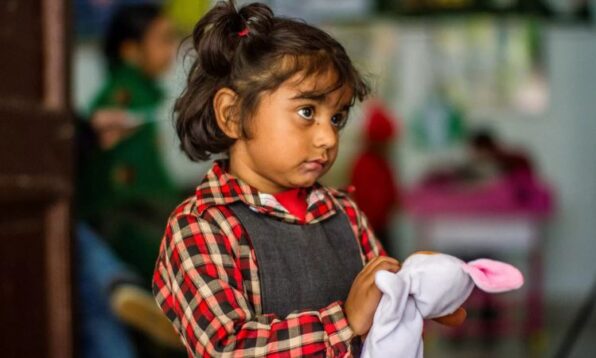
In February 2025, a 14-year-old boy in Chhattisgarh allegedly attempted to rape and murder a four-year-old girl. Police investigators noted he had been consuming violent, explicit content online. In Himachal Pradesh, an 11-year-old allegedly raped a seven-year-old girl. The mother of the girl shared the details of the brutality with the police. These cases have become a pattern in India, and this pattern is scarier than any other. Children as young as 11 and 14 are becoming predators and the reason behind this should frighten every Indian parent.
The phone in the room

India has gone through a digital revolution in the past decade, and it’s been remarkable. Cheap data, affordable handsets, and internet connectivity are reaching villages that barely had electricity a generation ago. Over 84 per cent of rural households now own a smartphone. That’s a staggering achievement by any measure. But no one thought carefully about what would happen when you hand a 10-year-old a device with unrestricted access to the entire internet and then leave him alone with it.
Studies suggest that nine out of 10 boys in India are exposed to pornography before turning 18. The data shows that this is a norm, not an exception. A significant proportion of that exposure begins well before adolescence through accidental pop-ups, shared links on WhatsApp, and the peer economy of “have you seen this?” that thrives in school corridors and neighbourhood groups.
The pornography these boys are stumbling upon isn’t just explicit; it is violent. It depicts women as objects and sexual aggression as desirable. And consent doesn’t even exist. Exposure to pornography at a young age affects children more than we’d like to admit.
The brain that doesn’t understand
The prefrontal cortex, the part of the brain responsible for impulse control, consequence-weighing, and moral judgement, isn’t fully developed until a person’s mid-twenties. In a 10 or 12-year-old, it is barely in service. However, what is highly active in an adolescent brain is the dopamine reward system. It responds powerfully to novel stimuli, and pornography is specifically engineered to exploit that. Each click, each new video, each escalation triggers a dopamine hit. The brain begins to associate sexual arousal with what it sees on screen: aggression, dominance, non-consent. This is quite literally how the developing brain learns to pattern-match. Forensic psychologists examining cases like the Chhattisgarh attack noted neural patterns in the accused that mirrored the violent sexual content he had reportedly consumed.
The silence that created the vacuum
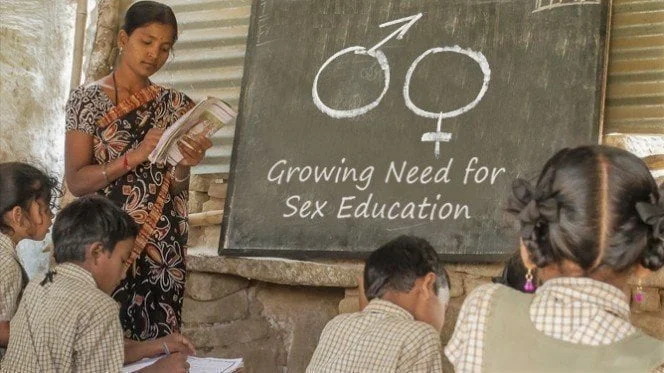
We must talk honestly about something India has been reluctant to face: the catastrophic failure of sex education. A survey of college students in Mumbai found that 88 per cent of boys and 58 per cent of girls had received absolutely no sex education from their parents. Their first, and often only, education about sex came from pornography and peer gossip.
Think about what that means for a 10-year-old with questions his body is beginning to ask. He has curiosity that is entirely natural and healthy. But there is no adult in his life equipped or willing to address it. In fact, Outlook India reported that 92 per cent of girls and 80 per cent of boys in co-ed schools do not discuss sex education because of their cultural beliefs.
So these young minds turn to the one place that answers them without judgement: the internet. And the internet answers them with pornography. We handed children a loaded weapon and then refused to teach them how it works. And now, we express horror when it goes off.
It’s not just the phone; it’s everything around it
Poverty, patriarchy, and peer pressure are doing their own heavy lifting. Child rights activist Yamini Abde identifies a chilling pattern: young boys in India see violent or daring acts as social currency — thrilling, peer-approved, and largely consequence-free, thanks to the protections the juvenile justice system affords them. The absence of fear matters. When you combine the normalisation of sexual violence through pornography with a social environment that prizes aggression, you have created a very dangerous cocktail.
Children mirror what they see in the adults around them, especially those they admire. So, what they see at home and on the screen shapes them. If adults around them do not face consequences for their obscene actions, and in fact, get to brag about them, the child is bound to repeat that action.
Are we asking the right questions?
There is a version of this conversation that becomes a witch-hunt, where we decide that these children are simply monsters, that India’s youth is morally corrupt, that the answer is to lock them up for longer and move on.
That would be the wrong conclusion, and a dangerous one. The right question isn’t, are these boys evil? The right question is, what did we fail to give them? We failed to give them sex education and homes where consent is valued. We were also unsuccessful in monitoring what was happening on the devices we handed them. Simply put: we failed to be responsible adults.
View this post on Instagram
The way this post classifies these obscene gestures as “entertainment” says everything you need to know about what we are doing as a society for our kids.
The real indictment
The cases we’re discussing are double tragedies. A child is violated and traumatised. And a child, shaped by forces he did not choose, is failed so comprehensively by his family, his school, his community, and his government that he becomes capable of extraordinary harm.
That is not a comfortable thing to say. It is far easier to call the perpetrator a monster and move on. Monsters don’t require us to examine ourselves. But a child who watched hundreds of hours of violent pornography on an unmonitored phone, who was never taught a word about consent, who grew up in a home and society where women were treated as lesser was, in a very real sense, produced by us.
India has one of the youngest populations in the world. Millions of children. The question of what we put in front of those children’s eyes, and what we choose to leave out of their education, decides what these children become. And right now, we are not doing enough to make sure the answer is good.
Featured Image Source
More from All About Eve
Sugar-Coated Sexism: AI Fruit Videos Are Colourful, Entertaining, And Deeply Sinister
40 Men In 3 Hours: What Happened When A Cop Disguised Herself As An Ordinary Woman At Night
India’s Gig Economy Is Booming But Not For Women: Why Are India’s Gig Platforms Still A Man’s World?
The Price Of Being A Woman: Women Pay 20% More To Simply Exist In India
‘Sammaan’ Or ‘Samaan’: How India’s Favourite Educator, Khan Sir, Has Categorised Women
- Share:
-

-

-