Web Stories
Lindsay Clancy: The Terrifying Reality Of Postpartum Depression And The Facts We’ve Known For Years


We love a sensational headline. Especially when the subject is a woman. A woman who, like millions of mothers around the world, was meant to live the life of a god on earth. Several descriptions of Lindsay Clancy have come out in the press in the days since her trial began.
Lindsay was “a loving, dedicated mother who did everything for her kids,” her husband said.
“She always wanted to be a mother, have many children, and I felt it was the best thing that ever happened to her,” her mother said.
“She was the type of nurse that you wanted taking care of you or your loved one… compassionate, kind,” her former co-worker said.
Yet, one January evening in 2023, 36-year-old Lindsay Clancy allegedly strangled her three children with exercise bands, cut her own throat, slit her wrists, and jumped from a window in an attempt to kill herself. The oldest of the children was five-year-old Cora and the youngest was eight-month-old Callum.
Her defence claims Lindsay was in the “throes of postpartum psychosis”. The prosecution says that this was a calculated, deliberate act of murder. The ongoing trial, broadcast every day across the world, is now being watched like a celebrity scandal unfolding live. Every day, there are new posts on social media—speculation, new details of the case, and wild theories on what made her do it. Did she even do it at all? Was it her ex-husband Patrick Clancy? How did he move on so quickly? Whose voice did she hear that day telling her to kill her children and then herself?
The question we’re not asking – Why do we still ignore postpartum depression?
PPD and the dangers of postpartum psychosis
Postpartum depression (PPD) in mothers can show up in many forms. It can manifest as unnecessary vigilance out of constant fear for the baby’s wellbeing, fatigue, insomnia or repeatedly disrupted sleep patterns, feelings of inadequacy, and difficulty bonding with the baby. This can develop further into thoughts of harming either herself or the baby, along with feelings of shame and hopelessness. Though rare, women with PPD can have episodes of psychosis which involve visual and auditory hallucinations and extreme mood swings, among other symptoms. Psychosis is considered a psychiatric emergency.

Lindsay Clancy’s cries for help
By most witness accounts, Lindsay seemed fine in the days leading up to the gruesome murders. Even on the day, witnesses say her behaviour was not out of the ordinary. And this is what shocks everyone about postpartum depression. The signs are easily missed.
But Lindsay didn’t wait for someone else to spot the signs. She told everyone who would listen that she was suffering. She told her husband, her parents, her mother-in-law, her sister, and others about her intrusive thoughts and how her mental health was suffering every day. Lindsay “begged for help” according to her mother-in-law. She consulted multiple doctors, tried the medicines they prescribed, went to an emergency room only to be turned away, and called a suicide hotline. She even checked herself into a locked-ward psychiatric hospital for several days to seek treatment.
A note by Lindsay Clancy, dated December 2022, read:
“I was the healthiest, happiest mom…I worked out every morning, meditated, and took care of myself so I could be the best for my kids. Until prescription medication stole me from my own body. It began with a touch of post partum anxiety.”
Part of her defence team’s argument is that Lindsay’s actions on that fateful day were a result of medical negligence. She was given medication and treatment that did not suit her, and none of her doctors or nurses listened. Hear the witness testimonies in the ongoing trial, and you will know that Lindsay was left alone with all or some of the children more than once when her husband was travelling for work or, in one instance, out skiing with their daughter.
A pertinent question then arises, reiterated by many on social media:

Lindsay had the painful self-awareness that most women in her situation don’t. They might feel something is off and dismiss it as normal. And if they do bring it up, those feelings are dismissed as “baby blues”, a cute name for something that can entirely take over a new mother’s brain. Everyone expects the maternal instinct to kick in suddenly and make the world a brighter, better place for new moms. No one wants to do the work of actively supporting her and preparing in advance for one of the most common afflictions women face after pregnancy.
We just leave her alone to figure it out…or expect her to follow instructions like ChatGPT with a womb.
A mental health emergency
One in five women in the US are affected by mental health issues during pregnancy or in the months after childbirth. PPD, among other mental health problems, is considered the most common complication of pregnancy and motherhood in the US.
Even in India, the stats are scary.
According to the World Health Organization, postpartum depression affects 22 per cent of Indian mothers, compared to the global average of 10-15 per cent. Women in urban India may still have the awareness and resources to deal with postpartum depression (an optimistic statement, I agree). But in rural India, where a woman’s physical health is often neglected, a mother’s mental health isn’t really on anyone’s list of priorities.
What causes postpartum depression or postpartum psychosis?
We all want to believe that having a supportive partner at home will make a new mother’s life easy. She can rest when she wants to and focus on the baby and her own recovery. Romantic, but untrue. The fact is that no matter how supportive her partner is, a woman’s body goes through a violent transition that doesn’t end with childbirth. She needs professional medical help, not just a soothing voice telling her to calm down.
Conclusive medical studies on the causes of postpartum depression or postpartum psychosis are few. Shocking, I know. But it is known that postpartum depression can be caused by hormonal shifts after childbirth. Estrogen, progesterone, and other pregnancy hormones drop sharply right after delivery, affecting brain chemistry. And hormones don’t act in isolation. There are massive shifts in a woman’s immune system that can also play a role in PPD. A woman’s immune system takes a backseat of sorts to protect the baby when she’s pregnant. As soon as the baby is born, the immune system kicks right back in, and not always the way it’s supposed to.
A study by The Ohio State University, titled Immune System Alterations and Postpartum Mental Illness: Evidence From Basic and Clinical Research, concluded, “Although there is a long standing appreciation that pregnancy-related immune changes are necessary for maternal physical health, there is a more recent growing recognition that the immune system also contributes to maternal mental health. Indeed, the existing evidence points to peripheral immune aberrations in postpartum mental illnesses.”
Add days or even months of sleep deprivation to this upheaval in the body, and you have a crisis on your hands. A crisis no one is willing to acknowledge.
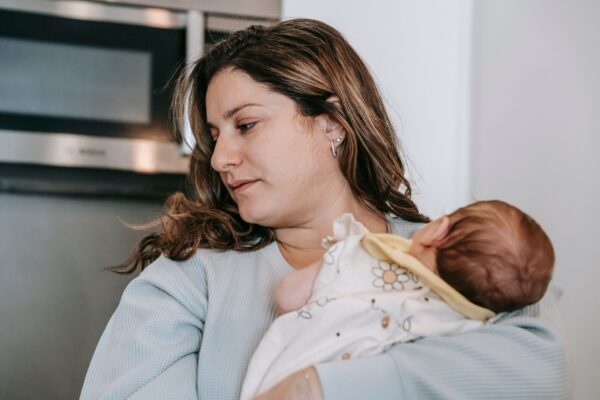
The relentless social pressure on mothers
One of Lindsay Clancy’s notes read:
“I’m terrified of something happening to my kids or doing something wrong to mess up their development…Our generation is inundated with information about every aspect of parenting. … It’s insane. For the last five years, I’ve just filled my mind with all things parenting and it’s just unhealthy.”
In India, the pendulum of judgement swings wildly between traditional and modern parenting. We pride ourselves so much on the unique practices in our culture that we force new mothers to adhere to them. Whether they want to or not doesn’t matter. In many families, there is a 40-day period of confinement meant to aid a woman’s recovery after childbirth and protect the newborn from infections. If a woman’s every need is being looked after, physically and mentally, this period of staying home, away from visitors, works. But if a woman is isolated from her family and is made to follow orders instead of doing what’s comfortable for her, it just means added stress for a person who is already overwhelmed by the complete dependence of an infant on her.
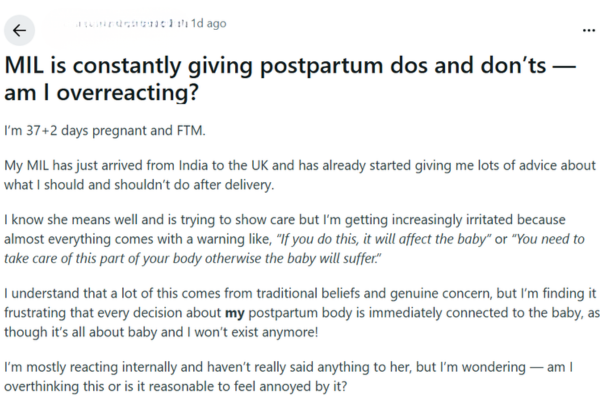
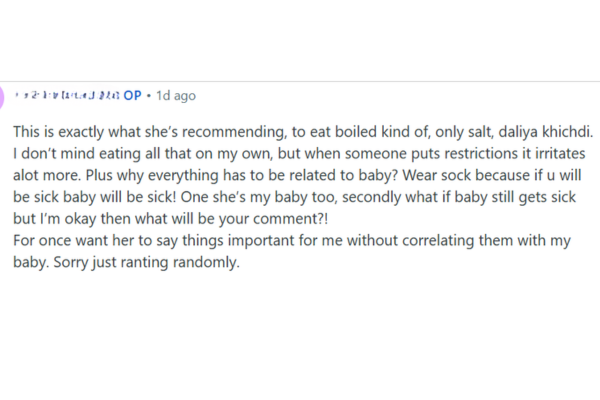
From diets to her bathing schedule and even the clothes she can and cannot wear, everything about a new mother is regulated and open to judgement in Indian households. Even in the peak of summer, new mothers are forced to sleep in warm rooms, cover their heads, and wear socks so that they don’t catch a chill and risk infecting the baby. You might or might not like unflavoured food with nothing but salt in it, but you have to eat it “for the baby”. Meanwhile, a woman whose whole life has been upended watches the father of said baby live his life per usual. And anything he chooses to change in his routine to “accommodate” the baby is met with cheers of appreciation and gentle taunts of being “henpecked”.
Do we really care about mothers?
The Lindsay Clancy case would not have got a tenth of the attention it’s getting now if she had harmed herself alone. The fact that a mother can harm her children is what is sending shock waves across the world. We don’t care if mothers suffer; we want them to fight, we want them to love like no one has ever loved before, we want them to be gods on earth. But we don’t want to have to care about them.
Will the world finally take maternal mental health seriously now? Will we acknowledge what pregnancy and childbirth actually do to a woman’s body and brain? Or will we watch this trial like a Netflix true crime documentary and conclude hamaare yahaan yeh sab nahi hota?
Featured Image Source
- Share:
-

-

-