Web Stories
Women Live Longer Than Men But Is A Longer Life Better? Research Says No

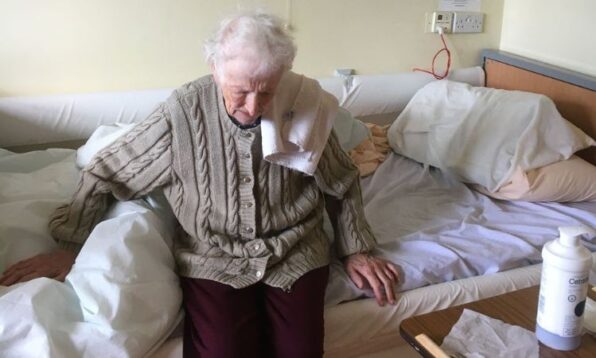
I’m sure you have heard some uncle quote a statistic about women living longer than men. This particular statistic is quoted in a condescending manner, to imply men do not live as long because women nag them to their graves. While the data is true, women do live on an average four years more than men, here is the question nobody tends to ask at those dinner parties: what are those extra years actually like?
Because the research, when you look at it, paints a rather less triumphant picture. Women do live longer. But they also spend significantly more of their lives in poor health, chronic pain, disability, and dependency. They are sicker for longer. In many cases, they are alive in a way that feels like a punishment rather than a prize.
The numbers behind the narrative
The concept researchers use to cut through the noise is healthy life expectancy — the number of years a person can expect to live in good health, free from serious illness or limiting disability. And here, the gender gap tells a very different story.
Though Indian women live longer than men, they only live 0.1 years of healthy life as compared to men. And this is the lowest healthy life expectancy of women among all South East Asian Countries. What this means, in plain terms, is that women spend a significantly greater portion of their lives in ill health. More years alive, but almost none of those extra years are healthy ones.
A landmark 2013 study published in The Lancet examined data from 187 countries and found a consistent pattern across virtually every nation on earth: women had higher rates of disability and illness despite their longevity advantage. The researchers described this as the “male-female health-survival paradox”; where women survive, but they do not thrive.
What women are actually living with

The conditions driving this gap are not obscure. They are familiar, common, and critically under-researched and undertreated.
Autoimmune diseases affect women at disproportionate rates. Approximately 80 per cent of all autoimmune diagnoses, including rheumatoid arthritis, lupus, multiple sclerosis, and Hashimoto’s disease, are in women. These are conditions characterised by chronic, relentless pain, fatigue, and progressive disability.
Musculoskeletal conditions like osteoporosis, fibromyalgia, and osteoarthritis are also far more prevalent in women, particularly after menopause, when the protective effects of estrogen disappear. A woman who lives to 83 has spent perhaps 15 years or more in a body that aches in ways men’s bodies, statistically, do not.
Mental health compounds the picture further. Women are diagnosed with depression and anxiety disorders at roughly twice the rate of men. Whilst there is legitimate debate about whether this reflects higher actual prevalence or higher rates of diagnosis (and significant underdiagnosis of men), the lived experience of women navigating these conditions across decades of life is a quality-of-life story that numbers alone cannot fully capture.
Then there is dementia, perhaps the most devastating entry on the list. Women account for nearly two-thirds of all dementia cases worldwide. Because they live longer, they have more exposure to the greatest risk factor for dementia: old age. A woman who reaches 85 faces a roughly one-in-five chance of developing the disease. Those final years, the ones that push her life expectancy past her male counterpart’s, are statistically likely to be years of profound cognitive and personal loss.
The pain problem nobody talks about

If there is one thread that runs through women’s experience of health across their lifespan, it is pain, specifically, the chronic, under-acknowledged, undertreated kind.
Research published in the Journal of Pain has consistently found that women report higher pain sensitivity, more frequent pain, and more debilitating pain across nearly every condition studied. Yet studies have also found that women’s pain is taken less seriously by clinicians. They wait longer in emergency departments and are more likely to have their pain attributed to psychological causes.
The story of endometriosis is instructive here. The disease affects 190 million women worldwide and 42 million women in India alone. It causes pain so severe that some sufferers describe it as worse than a heart attack. And yet the average time from first symptoms to diagnosis is around eight years. Eight years of a woman being told her pain is normal, manageable, perhaps exaggerated.
This is not merely a medical failure. It is a quality-of-life catastrophe, quietly multiplied across millions of women, across decades of their longer lives.
Related: Women Must Suffer Longer To Be Taken Seriously By Doctors. This Endometriosis Study Proves It
Why does this happen?
The explanations are biological, social, and structural, and none of them, individually, is satisfying. Together, they form something more uncomfortable.
Biologically, women’s immune systems are more reactive, which protects them against many infections but also predisposes them to the autoimmune conditions that cause so much suffering. The hormonal transitions of menopause trigger a cascade of physiological changes that increase vulnerability to bone loss, cardiovascular disease, and cognitive decline. Evolution, in other words, seems to have struck a bargain: longer life in exchange for a more embattled one.
Socially, women carry a disproportionate burden of unpaid labour, like caring for children, ageing parents, and ill partners, throughout their lives. Structurally, medicine has historically centred the male body as its default. For decades, clinical trials excluded women or failed to analyse results by sex. Drug dosages were calculated on male physiology. Conditions that disproportionately affect women, like endometriosis, fibromyalgia, and lupus, received a fraction of the research funding directed at conditions more common in men. The consequences of this institutional blind spot are not abstract. They live in women’s bodies, in the form of misdiagnoses, delayed treatments, and ineffective drugs.
What would change things?
None of this is inevitable. The gap between women’s lifespan and their healthspan is not a law of nature; it is, in large part, a policy failure. More funding for research into conditions that disproportionately affect women is needed. Greater recognition of unpaid caregiving and better support for those who provide it are also non-negotiable. The goal should not simply be to help women die older. It should be to help them live better, to close the gap between the years on the certificate and the years spent in genuine health and vitality.
Featured Image Source
More from All About Eve
Do You Keep Getting UTIs Even After Antibiotics? Here Is What It Means
Always The Calm One In The Room? Here’s Why That’s Not The Best Thing
Women Suffer From IBS More Than Men: The Science Behind The Gender Gap
Your City’s High AQI Could Be Making Your Periods More Painful. Here’s All You Need To Know
Women Who Clean Their Homes Regularly Have Smokers’ Lungs Without Smoking: 20-Year Study Reveals
- Share:
-

-

-