Web Stories
Are You Trying Hard To Find Love? It Could Be Why You’re Still Looking


Why is dating so hard in 2026? And not just emotionally but also administratively. We’re managing multiple conversations across multiple platforms, trying to remember which Aditya mentioned being a Sally Rooney fan and which one sounds like he’s tipping into the manosphere. The only way to remember all this is optimisation. A spreadsheet starts to feel less like a red flag and more like basic project management. But the moment you open that spreadsheet, you’ve already made a consequential decision: you’ve decided that love is a problem that can be solved with the right system.
Related: Are We Loving Our Relationships To Death? How The Rise Of PDR Culture Became The Fall Of Romance
Is the hustle mindset colonising our love life?
.png)
We live inside an optimisation culture. We track our sleep, our steps, our macros, our screen time, and our calories. Basically everything. Productivity influencers tell us to time-block our mornings and batch our errands. Everything is a system to be refined, a process to be improved for better productivity. So, of course, it was going to bleed into dating.
The dating optimisation trend, which includes spreadsheets, scoring rubrics, structured “date audits,” even AI tools that help you analyse your texting patterns, is just hustle culture arriving, a little late, to the one part of life we used to consider sacred chaos. It tells you that if you’re still single, it’s probably a pipeline problem that can be solved with better metrics. The appeal of optimising our love lives is real. When something is painful and confusing, systems offer the illusion of control. If you can measure it, you can manage it. If you can manage it, there will be almost no chaos to manage.
What dating optimisation gets right
Optimisers aren’t entirely wrong or useless. Managing a spreadsheet means keeping a record of everything, right or wrong. So logging every detail of what went wrong or right on a certain date is basically self-awareness. When you can see the pattern written down, it’s much easier to recognise and change it.
There’s also something to be said for treating your time as valuable. The person who goes on 40 aimless dates because they can’t bring themselves to be honest about what they want isn’t more romantic than the person who’s thought about it. So yes, some level of intentionality is healthy. Knowing what you want, being honest about dealbreakers, not tolerating the same nonsense for the fifteenth time, none of that is cold. That’s just being a well-managed adult. Spreadsheets aren’t the problem here at all. So what is it?
What the trend gets wrong
)
Love, or even just the possibility of love, requires a kind of openness that is fundamentally incompatible with optimisation. It requires you to be surprised. To find yourself inexplicably drawn to someone who doesn’t fit your rubric. To be, at some point, a little bit irrational and do things you wouldn’t have otherwise. Sometimes, you find the best people when you do something out of the ordinary. A spreadsheet can never do that. Planning love or any sort of emotion is just not possible.
So, when you rely on the spreadsheet to track your love life, it doesn’t just track your dates. Over time, it teaches you to evaluate people before you’ve actually felt anything. You’re no longer asking, ‘Do I like this person?’ You’re asking whether this person scores well. And those are very different questions.
There’s a term from economics called Goodhart’s Law: when a measure becomes a target, it ceases to be a good measure. Applied to dating — the moment you start optimising for your metrics, you stop optimising for actual connection. You get very good at finding people who check all the right boxes, but you get worse at noticing when something ignites a spark. The other problem is what it does to the other person. Humans are surprisingly good at feeling like they’re being processed rather than seen. A date who’s mentally ticking boxes gives off a different energy than someone who’s genuinely curious about you.
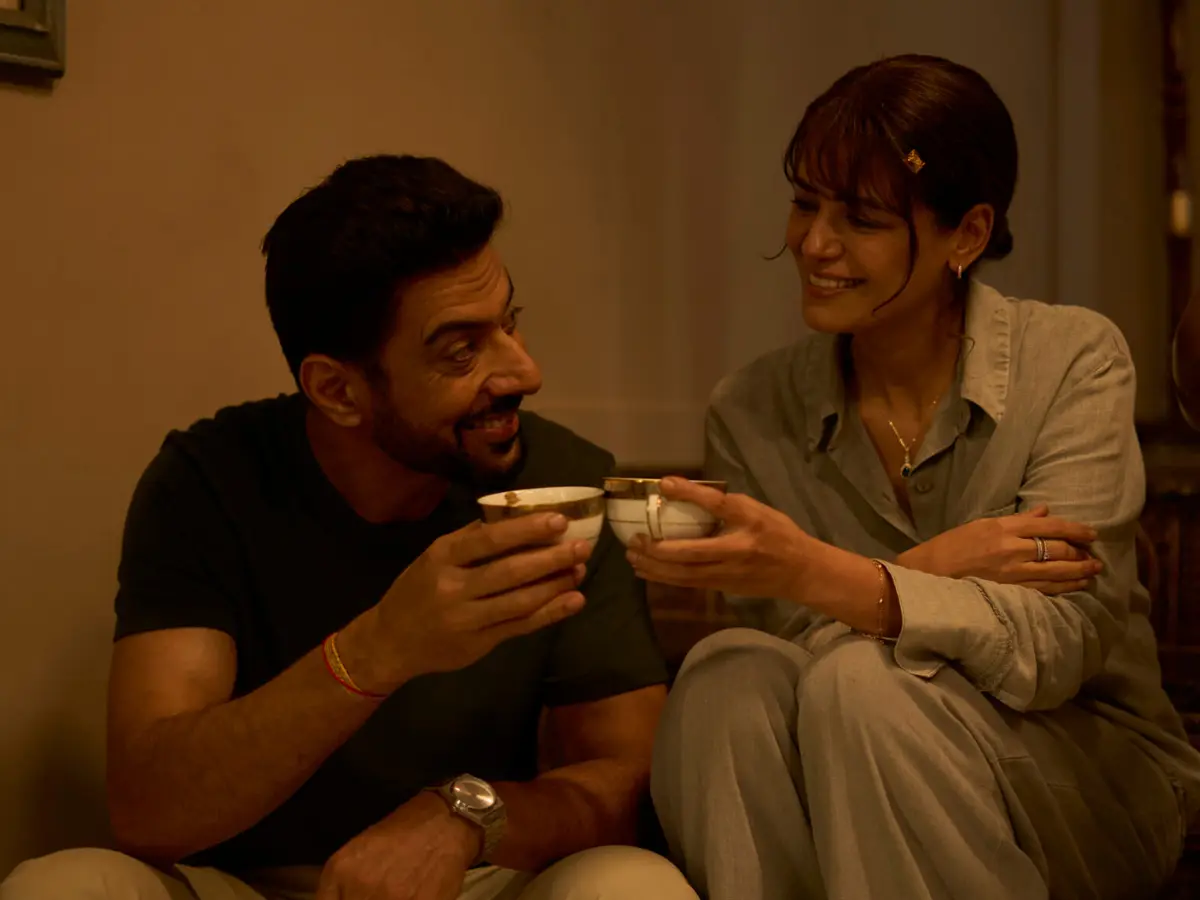
A recent series called Maa Ka Sum, starring Mona Singh, deals with this exact problem. A son tries to optimise his mother’s dating life using an algorithm, but it simply doesn’t work. Even when all her dates tick the right boxes, they don’t make her feel drawn to them. And guess what, she ends up with someone who doesn’t tick all the boxes but excites her and makes her happy. That’s what love is supposed to do.
So, what’s the alternative?
The alternative is something harder than a spreadsheet. The only way to find real love is to reflect and work on yourself. There’s no other way you can find someone you’d want to be with. Before you rush to find love and be with someone, it’s better to sit with yourself and recognise your patterns. Why do you always get entangled with the same kind of people? Are you always the one ghosting after the first date?
The truth is, some things don’t improve with optimisation. They improve with time, honesty, and a willingness to feel things you can’t quantify. Love isn’t a startup. It doesn’t need spreadsheets and AI. It needs you actually to be there because we lose the messy and slightly humbling process of fancying someone when we treat intimacy as a performance to be quantified.
Featured Image Source
Related: Closure Is A Myth. Here’s What Actually Helps You Move On After A Breakup
FAQs
Q1. Why does dating feel like a full-time job in 2026?
Because it essentially is one. Dating app fatigue has reached a critical point, with 78 per cent of users experiencing emotional, mental, and physical exhaustion from swipe-based platforms.
Q2. Why are people quitting dating apps in 2026?
Around 79 per cent of Gen Z are ditching dating apps to find love offline. Reasons are many, including that you never get to see the real person. All you see is a perfectly curated profile, saying all the right things.
Q3. Is the dating optimisation trend actually helpful?
In small doses, maybe. Spotting patterns in who you date or being clear about dealbreakers is just self-awareness. But when people start scoring dates like job applicants, something gets lost.
Q4. What is dating burnout, and how do you know if you have it?
Dating burnout is the emotional exhaustion that comes from prolonged, often fruitless effort on dating apps. Over 53 per cent of singles report experiencing it occasionally or frequently. Signs include dreading opening the apps, going through the motions on dates, growing cynicism about ever meeting someone, and feeling like romance is a chore rather than something to look forward to.
- Share:
-

-

-