Web Stories
Back To The 90s? Rajasthan Village Bans Smartphones For Young Women. Here’s What It Means


Some stories feel less like news and more like a time-travel mishap, as if someone accidentally pressed rewind on progress. A recent decision by a gram panchayat in Rajasthan falls squarely into that category. The panchayat has banned smartphones for young women, allowing only basic keypad phones while restricting the use of smartphones. On paper, the reasons sound well-meaning. Panch Himmataram justified this decision, citing that too much mobile usage can lead to poor eyesight and distractions in studies. And for daughters-in-law who aren’t studying, having a smartphone means the kids will use it, leading to the same eyesight issues. But we all know, it’s not about any of those issues. It is about who is trusted with independence and who still needs to be kept in check.
“If girls use phones, they’ll run away”
View this post on Instagram
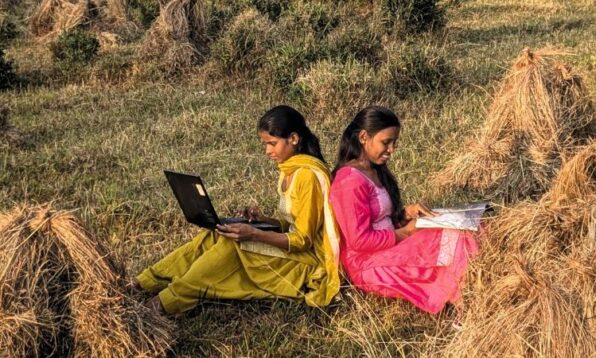
A smartphone today is not a luxury accessory. For many young women, especially in rural India, it is their library, classroom, social circle, news source and emergency contact rolled into one. It connects them to online lectures, scholarship forms, career guidance, health support, and friends they may never meet otherwise. Take that device away, and life becomes smaller. Addressing the community, the Panch said that the young women who are studying will be allowed to use mobiles at home after school, but under restrictions. They are not allowed to step outside with that mobile phone. The decision will apply to 15 villages across the Bhinmal area, including Ghazipur, Pawali, Kalda, Manojiyawas, Rajikawas, Datlawas, Rajpura, Kodi, Sidrodi, Aldi, Ropsi, Khanadewal, Savidhar, Hathmi Ki Dhani, and Khanpur. This rule, quite ironically, applies from January 26, which is celebrated as the Republic Day of India.
What makes the ban even more unsettling is how perfectly it fits into the broader story of gender inequality in education. On AfterHours with All About Eve, educator Alakh Pandey, popularly known as Physics Wallah, spoke about how girls already receive less digital access than boys, simply because they are girls. When he visited a government school and realised that girls there didn’t have any mobiles, the school teacher justified this by saying, “If girls use phones, they’ll run away.”
Now add a formal village-level ban on top of this, and it’s not discrimination anymore, it’s a ritual. What was once a gap becomes a rule. Girls who were already negotiating for shared access are now told, without hesitation, that they should not have it at all.
Related: Girls With No Mobile Phones: Alakh Pandey Reveals The State Of Education In India
What it means to ban smartphones in digital India

Supporters of such bans often wrap them in the language of protection. They talk of safety, distraction, morality, and culture. But interestingly, these anxieties almost always bloom only around girls. The same phones in boys’ hands are seen as tools, not threats. The same social media becomes “networking” for them and “danger” for their sisters. The cost of such decisions is high. When you restrict a girl’s access to technology, you quietly cut her off from opportunity, reduce her confidence in navigating digital spaces, and make her dependent on a man.
All of this is happening in a country that proudly campaigns for Digital India and talks about coding clubs for girls, online classrooms, and virtual career counselling. If screen time, cyberbullying or addiction are the concerns, the answer lies in digital education, firm but equal rules, and conversations about responsible use. A gender-specific ban does not solve the problem. It simply tells girls they cannot be trusted to handle the same world that boys are being prepared to lead.
In the end, the gram panchayat’s smartphone ban is more than a rule about phones. It is a statement about freedom. A girl with a smartphone can learn, question, apply, aspire and connect far beyond the radius that tradition once allowed. Take it away, and you do more than limit her internet access; you quietly redraw the border of her life.
Featured Image Source
More from All About Eve
Gen Z Is Ready For Intercaste Marriage, But Is India?
Being A Daughter: The World’s Most Draining Job With No Perks
The Invisible War: How Constant Fear Rewires Women And Their Mental Health
- Share:
-

-

-