Web Stories
Gen Z Is Ready For Intercaste Marriage, But Is India?


A video is doing the rounds on Instagram, and it’s struck a nerve across the subcontinent. A young woman, visibly nervous, sits before her parents to confess what she believes might end in catastrophe: she’s in love with someone from another caste. The video is going viral because her parents accept it with no retaliation. Marriage in India isn’t just about marrying someone you love. It is about centuries of history and the invisible boundaries of social norms. That’s why this video has gone viral. Because in India, telling your parents you want to marry outside your caste remains one of the most dangerous conversations you can have. Though intercaste marriages are becoming more common among Gen Z, they are far from being the norm in India.
View this post on Instagram
The numbers tell a sobering story
According to the 2011 census, a mere 5.8 per cent of marriages in India cross caste boundaries. Northeastern India is the most progressive in this regard. Mizoram has the highest rate of intercaste marriages in India, at 11.6 per cent. What’s particularly striking is that the percentage of intercaste marriages in India has barely budged over seven decades, fluctuating around 5 per cent since 1951.
These statistics show how deeply entrenched caste remains in the Indian psyche, despite decades of modernisation, urbanisation, and constitutional guarantees of equality. When you consider that roughly 95 per cent of Indians marry within their caste, you realise that the caste system doesn’t need legal sanction to survive. It thrives through social pressure, family expectations, and the unspoken understanding that some boundaries simply aren’t meant to be crossed.
When love becomes a capital offence
The darker edge of this story reveals itself in what happens when young people dare to cross those boundaries anyway. In 2010, the National Commission for Women documented 326 cases of “honour” crime, the majority stemming from intercaste marriages. The National Crime Records Bureau recorded around 25 cases in 2020, but these figures barely scratch the surface because families, communities, and authorities often label such incidents as suicides or accidents, or fail to report them altogether.
Recently, in Maharashtra, a 20-year-old man named Saksham Tate was brutally killed by his girlfriend’s family for daring to love across caste lines. His girlfriend, Aanchal, applied vermillion during his funeral and declared she would live the rest of her life as his widow. In Haryana in November, a 23-year-old woman was shot dead by her own brother for marrying an autorickshaw driver from another caste, a marriage she’d entered over two years prior. Countless cases like these show how society views intercaste marriages, even now, as existential threats to social order. The infamous Manoj and Babli case from Haryana, where a young couple was murdered despite being accompanied by five police officers, demonstrates how deeply this violence is woven into the social fabric, and how powerless the state can be to prevent it.
The architecture of endogamy
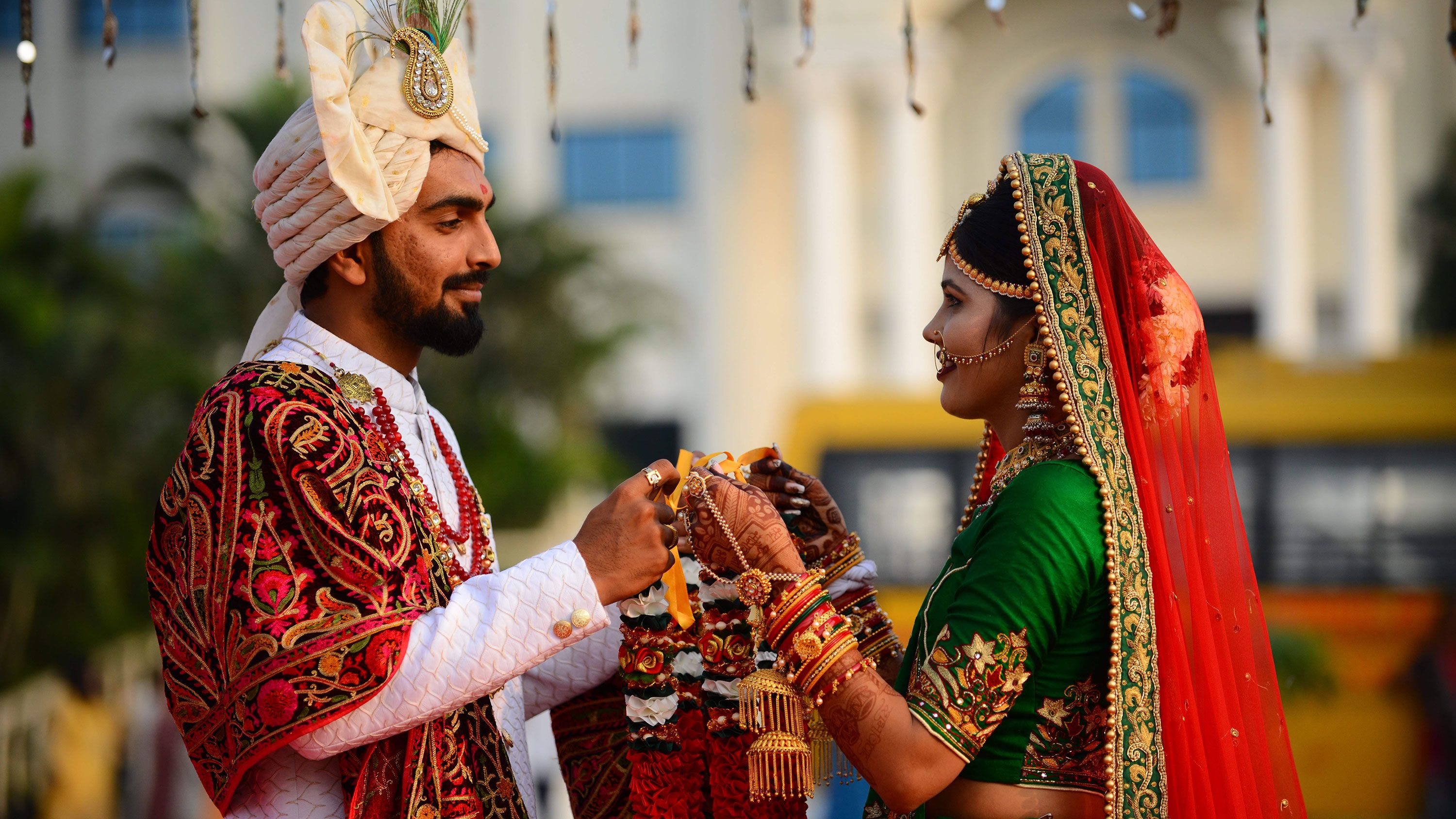
Understanding why intercaste marriage remains so rare requires unpacking centuries of social engineering. Marriage in India is endogamous, meaning it is restricted within a group. When someone marries outside their caste, consequences range from violence and social boycott to family ostracism and death. In parts of India, particularly in states like Haryana and Rajasthan, khap panchayats still wield enormous power. These panchayats often order or encourage violence against intercaste couples.
You might think education would erode these barriers, but research reveals something surprising: an individual’s own education level shows no significant association with their likelihood of entering an intercaste marriage. Educated Indians are just as likely to marry within caste as their less-educated counterparts.
Even government incentives haven’t moved the needle much. Schemes like the Dr Ambedkar Social Integration Through Inter-Caste Marriage programme offer financial rewards to couples who marry across caste lines, particularly when one partner is Dalit. The Supreme Court has declared intercaste marriages to be in the national interest. Yet the numbers remain stubbornly low. The reality is that in a society where arranged marriages still dominate, parents and extended families maintain enormous control over matrimonial decisions. Marriage isn’t viewed as a union of individuals but as an alliance between families, communities, and lineages.
This brings us back to that viral video. The video is both hopeful and heartbreaking. Hopeful because it shows change is possible, heartbreaking because it reminds us how rare such acceptance remains. In a truly progressive society, intercaste marriage wouldn’t be revolutionary. It would be banal. The fact that we’re still celebrating basic parental acceptance in 2025 tells you everything about how far India still has to travel.
Featured Image Source
More from All About Eve
Being A Daughter: The World’s Most Draining Job With No Perks
Turkish Couple Divorce Case: How A ‘Like’ On Social Media Sparked A Legal Separation
LinkedIn’s Algorithm Bias: Why Every Woman Should Be A ‘Man’ On LinkedIn
“Historic Violence Led To Patriarchy In India”: Amish Tripathi On Influences In Indian Society
- Share:
-

-

-