Web Stories
The Auction Of Marilyn Monroe: Exploited By Men, Even 60 Years After Her Death

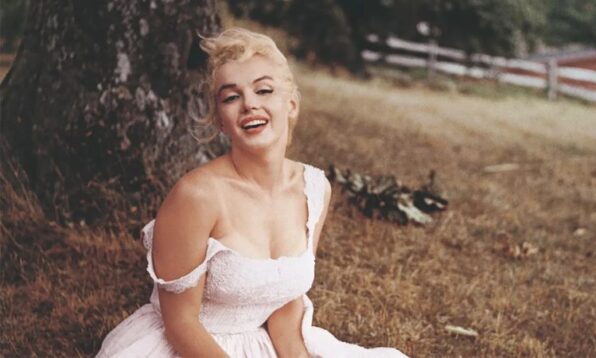
Marilyn Monroe died on August 4, 1962. She was 36 years old, alone at home, and by most accounts, exhausted by the industry that had chewed her up, by the men who had used her, and by a public that worshipped the image of her while rarely seeing the person beneath it. She had wanted, in her own words, to be taken seriously. Sixty-four years later, with her 100th birth anniversary approaching, you might hope the world had found a way to honour who she actually was: a brilliant comedian, a shrewd businesswoman, a woman who endured profound pain with remarkable resilience. Instead, you can currently bid on an X-ray of her pelvis. Yes, even 60 years after her death, Marilyn Monroe’s body is up for auction.
Auction or a gross violation?
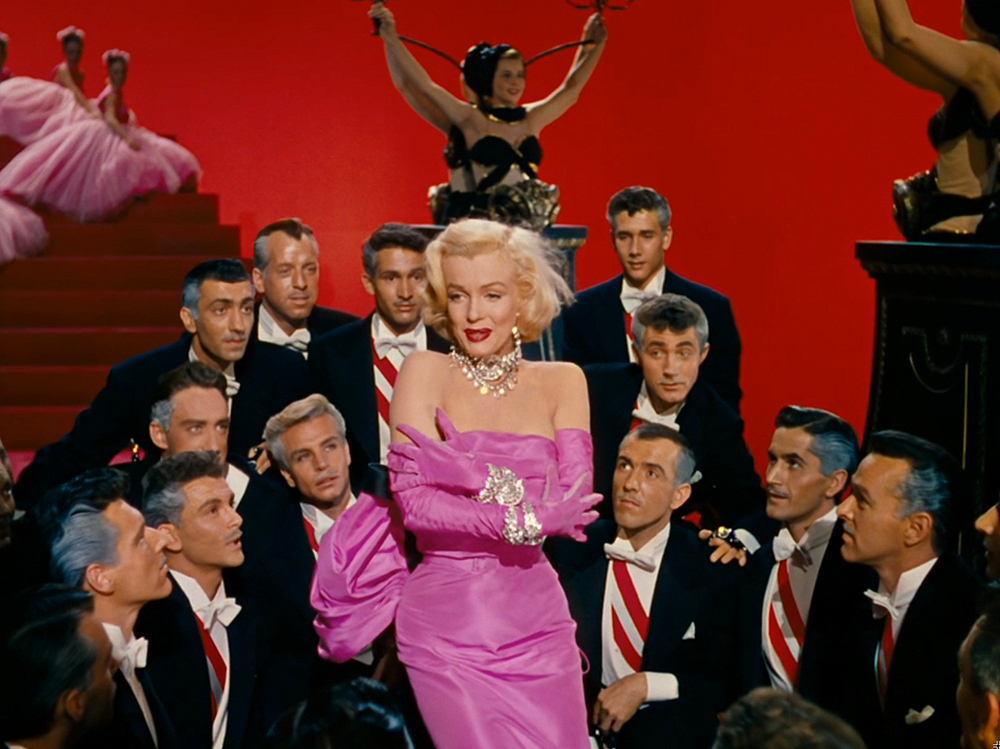
Two high-profile auctions will mark Marilyn Monroe’s centennial in early June. Heritage Auctions is selling items from the estate of her close friends Norman and Hedda Rosten, including letters, handwritten notes, poetry, and correspondence from her then-husband, Arthur Miller. Julien’s Auctions, in partnership with Turner Classic Movies, is offering over 190 items connected to her life: the front gate from her home, annotated film scripts, a Jeanne Lanvin ivory silk gown, vintage cosmetics, and personal garments.
But buried in the listings are four medical X-rays from the 1950s: a chest X-ray, a pelvic X-ray from the same year, and two others. The pelvic X-ray was requested by her gynaecologist, D Leon Krohn. It shows her pelvis and spine.
The chest X-ray is listed with a pre-sale estimate of $2,250. The backlash online has been swift and fierce, with critics calling the sale “disturbing” and a straightforward invasion of privacy. One TikTok user has called for followers to raise the roughly $30,000 needed to buy and destroy the X-rays.
The auction houses have defended the sale since there is no clear legal protection for the medical privacy of the dead. But the question was never really legal. It was moral. Monroe’s chronic gynaecological issues caused her immense suffering. She had multiple miscarriages. Doctors took these scans during moments of private pain with no imaginable expectation that strangers would one day gawk at and bid on them. The fact that we can sell them does not mean we should.
This is not the first time her body has been treated as a commodity. It won’t, unfortunately, be the last.
Men didn’t let Marilyn Monroe rest in peace, even in her grave
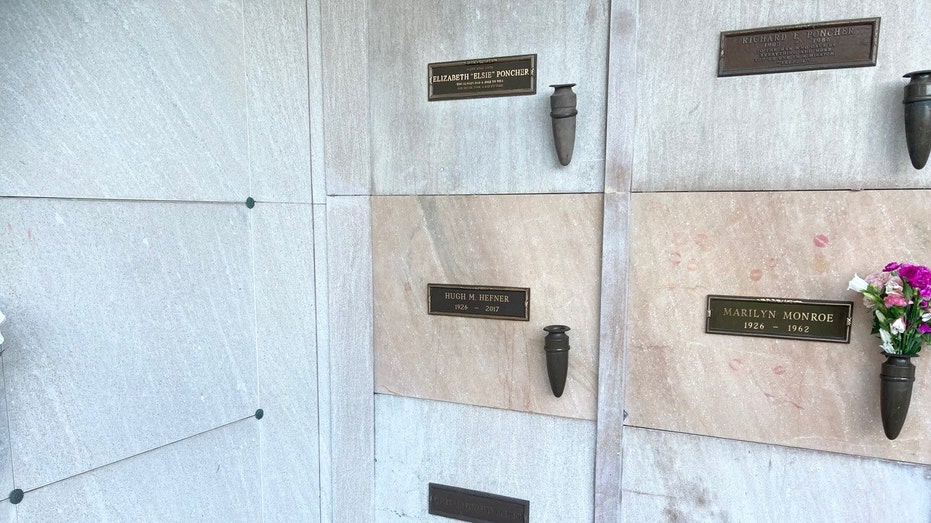
Joe DiMaggio buried Marilyn Monroe at Westwood Village Memorial Park Cemetery in a crypt he kept filled with red roses for 20 years after her death. In 1992, three decades after Monroe’s burial, Hugh Hefner, the founder of Playboy magazine, paid $75,000 for the crypt directly beside hers. His stated reason was disgustingly poetic. “Spending eternity next to Marilyn is too sweet to pass up,” he told the Los Angeles Times. He said he felt a “double connection” to her because they were born the same year, and because she was “the launching key to the beginning of Playboy.”
Hefner built his empire on nude photographs of Monroe taken in 1949, before she was famous, when she was a struggling young actor who needed the money. Hugh Hefner bought the photographs without Marilyn Monroe’s knowledge or consent, and when the magazine launched in 1953, she did not receive even a cent. “I never even received a thank you from all those who made millions off a nude Marilyn photograph,” she wrote in her autobiography. “I even had to buy a copy of the magazine to see myself in it.”
He bought the crypt at 66, when he was still very much alive, so that a woman who had died before he could exploit her twice would lie beside him forever. When he died in 2017, aged 91, he was buried there as he had planned.
Then there is Richard Poncher. Poncher was a businessman who had acquired the crypt directly above Monroe’s. Before Poncher died in 1986, he gave his wife, Elsie, specific instructions: she was to have him buried face down. His reasoning, as Elsie later told the Los Angeles Times, was explicit. “If I croak, if you don’t put me upside down over Marilyn, I’ll haunt you the rest of my life,” he said.
More recently, in 2024, a Beverly Hills tech investor named Anthony Jabin paid $195,000 for a crypt nearby. “I’ve always dreamt of being next to Marilyn Monroe for the rest of my life,” he said.
The cost of being Marilyn Monroe
There is a word for the belief that you are entitled to a woman’s body, that you can possess her for your gratification, and that you are owed her proximity, whether she is alive or dead. We don’t often apply that word to men buying cemetery plots or bidding on medical records, because those things happen slowly and decorously, with auction catalogues and press releases. But the reasoning is the same that defined Monroe’s entire life: she was considered property, a thing of beauty to be acquired, not a person.
She knew it. It was the thing she fought against most fiercely and with the least success. She wanted to be a serious actor. She wanted authorship over her own image. Now, on what would have been her 100th birthday, the world is celebrating the icon by selling X-rays of her insides. Marilyn Monroe once said, “I knew I belonged to the public and to the world, not because I was talented or even beautiful, but because I had never belonged to anything or anyone else.”
She said it like a fact, but she probably meant it as a wound. Decades later, we’re still proving her right.
Featured Image Source
More from All About Eve
‘Men Training To Attack Women Who Say No’: Social Media’s Latest Trend Is Shocking But Not New
The Rise Of Mounjaro Brides: Is India’s Obsession With The Perfect Bride Now A Medical Emergency?
- Share:
-

-

-