Web Stories
Mother Penalty vs Fatherhood Bonus: Having A Baby Is A Career Boost For Men And A Pay Cut For Women

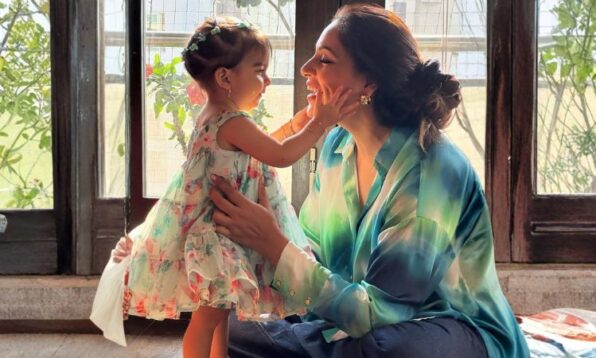
The moment a woman announces her pregnancy at work, she loses, on average, four per cent of her salary per child. When a man announces he’s having a baby, he gets a pay rise. This is no joke. It is one of the most robustly replicated findings in labour economics, documented across 134 countries, in sectors from law to tech to finance. Having a child is statistically one of the best career moves a man can make and one of the most damaging a woman can experience. Researchers call it the motherhood penalty and the fatherhood bonus. Together, they make parenthood the most brazenly unequal experience in professional settings. Here’s exactly how it works, and why it’s even worse in India.
The ‘curse’ of being a mother
Globally, studies show that women’s earnings drop significantly after the birth of their first child, and the gap does not close quickly. In many cases, it never fully closes at all. Men, meanwhile, often experience the opposite. Fatherhood is associated with stable or even increased earnings. One explanation offered by researchers is that employers interpret fatherhood as a signal of responsibility and commitment. In hiring experiments, identical CVs have been rated differently depending on whether the candidate is identified as a parent, and whether that parent is a mother or a father. Mothers are seen as less committed, less reliable; fathers, more stable, more promotable.
It is difficult to think of another life event that produces such a stark reversal of perception.
Is the motherhood penalty the biggest risk to women’s careers?

One of the quickest arguments in defence of this divide is that new mothers take long maternity leave, but the data suggests something more complex. Even women who return to full-time work face slower wage growth and fewer promotions. The motherhood penalty persists long after the logistical challenges of early childcare have passed.
Part of the explanation lies in how workplaces are structured. The “ideal worker” is still imagined as someone who is always available, unencumbered by care responsibilities, and able to prioritise work above all else. Parenthood disrupts this ideal, but not evenly. When women deviate from it, they are penalised. When men do not, they are rewarded.
There is also the matter of unpaid labour. Across the world, women continue to shoulder a disproportionate share of childcare and domestic responsibilities. This shapes not only how much they can work, but how they are perceived at work. Flexibility, when taken by women, is often interpreted as a lack of ambition. The same flexibility, if taken by men at all, is more likely to be framed as progressive or even admirable.
The Indian context: Sharper edges of inequality
Nowhere do these dynamics feel more consequential than in India, where the story of work and gender is already uneven.
India’s female labour force participation rate remains among the lowest in the world, and motherhood often marks a decisive turning point. Many women who step out of the workforce after childbirth struggle to return, particularly to formal, full-time roles. Even those who remain employed frequently find themselves navigating a more precarious path. Recent research suggests that even well-meaning policies can have unintended effects. The expansion of paid maternity leave, for instance, has been linked in some cases to employers becoming more cautious about hiring women of childbearing age, or reallocating them into roles perceived as less “risky”.
Layered onto this is the intensity of unpaid care work in Indian households. Childcare is still perceived as a woman’s job even if she’s working full-time. On top of that, they have the responsibility of cooking, cleaning, and taking care of the elderly. The result is a cumulative burden, where professional ambition must constantly negotiate with social expectations.
In contrast, fatherhood in India, much like elsewhere, tends to reinforce traditional roles rather than disrupt them. Men are expected to provide, remain in the workforce, and advance. The cultural narrative aligns neatly with the economic one, creating conditions where the fatherhood bonus can operate almost invisibly.
Why does this inequality persist?

What is striking is how normal this has come to feel. The divergence between mothers and fathers is often explained away as natural, inevitable, or a matter of personal choice. But the consistency of the data across contexts suggests otherwise. This is not to say that nothing is changing. Conversations around flexible work, shared parenting, and paternity leave are gaining ground. Some organisations are beginning to rethink how they evaluate performance and potential. Yet progress remains uneven and often superficial. The deeper issue is not simply how workplaces accommodate parenthood, but how they define it. As long as caregiving is seen as primarily a woman’s responsibility, any accommodation risks reinforcing the very inequality it seeks to address.
So, is parenthood the most unequal experience at work? In many ways, it is hard to argue otherwise. Few other life events so reliably widen the gap between men and women, shaping not just immediate earnings, but long-term trajectories, opportunities, and leadership representation.
Featured Image Source
More from All About Eve
The Price Of Being A Woman: Women Pay 20% More To Simply Exist In India
‘Sammaan’ Or ‘Samaan’: How India’s Favourite Educator, Khan Sir, Has Categorised Women
Exhausted And Overlooked: The Making Of A Female Burnout Epidemic
- Share:
-

-

-