Web Stories
Relatable To Questionable: Inside The Life Of Puja Controversy And Our Obsession With ‘Authentic’ Struggle

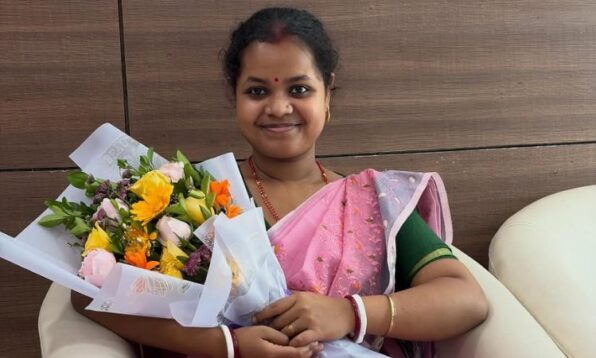
If you have been online lately, you might have come across the reels of a woman living in a rural area speaking in English about books and films you might not even have heard of. She talks about feminism, menstrual leave, and other relevant topics. Her name is Pujarini Pradhan, known as lifeofpuja online. Currently, the discourse around her has gotten bigger but not essentially better. This has now snowballed into what is being called ‘the life of Puja controversy’, where creators are dissecting her unexpected rise to fame and money.
The curious case of Pujarini Pradhan

The Internet has thrived for a long time on aspiration. We follow people who seem bigger and better than us, so that we can aspire to be like them. But Pujarini is not one of those people. She offers recognition more than aspiration. It’s easier to identify yourself with her rather than looking at her as an idol. Her life feels familiar, with everyday negotiations like family expectations, restrictions, and compromises. Pujarini’s authenticity worked and she went viral.
Within seven months of creating the account, Pujarini has 690K followers, which remains a huge feat for most creators. While she has received a lot of love online, Pujarini’s fame has led to the rise of another type of content — cynicism. Cynics are outraged because how can a rural woman, with the kind of lifestyle she has, do this all on her own? But if you focus just a little bit, the real question is uglier: can someone from a background like hers actually be doing so well on her own?
Life of Puja controversy explained
People are dissecting not her journey but her identity. The cultural commentary and the intrigue people claim to have about Pujarini comes across as just a guise for finding a way to tear her apart. The sceptics are trying to find ways to make Puja falter and fail. They are calling her an ‘industry plant’ because, of course, a rural person can never be intelligent, well-read, and articulate. India’s privileged upper class has reserved art and intelligence for itself. Books, films, music, and having opinions stay way out of the league of the underprivileged. The upper class becomes immensely uncomfortable when somebody they assume to be less fortunate has access to all of these. How dare a woman from a rural area have opinions of her own, on things we believe are too intelligent to be comprehended by them?
This discomfort doesn’t come from the fact that we do not want to see people like Pujarini succeed (or maybe it does, who can say). But it definitely comes from the fact that Pujarini refuses to be validated and live at the mercy of the urban privileged. She takes up space on her own. We claim to love the underdog. But the underdog we actually love is the one who’s still struggling and needs us. Pujarini is not asking to be saved or pitied or uplifted. She’s doing fine on her own. And we can’t digest that because her freedom robs us of our saviour complex.
We don’t love progress; we love a protege
However, this isn’t new. Reality TV has run this script forever. The talented contestant gets through. But the contestant who’s talented and has a struggling backstory where their father is a rickshaw puller, and their mother has to cook on a chulha? That’s who gets the winner’s edit. Because that makes us feel good about ourselves. We can proudly show off our contribution in taking that person from rags to riches. Tragedy is what gets you the headline and applause, but Pujarini skipped that part. We, India’s upper class, want to see the marginalised win at life only when they credit their success to us at the podium. We don’t love progress; we only love a protege.
But there’s something more layered about this scepticism. Because we can’t outrightly say her success makes us uncomfortable, we switch to finding flaws. ‘How come she speaks English but her pronunciation hasn’t improved? Why does she pronounce very as bery?’ Probably because it doesn’t matter. English isn’t everyone’s first language, and nobody owes it to anyone to be fluent in a language.
Pujarini has always stated that she’s not here to make money. So, now the argument is — ‘Why is she doing paid partnerships?’ The argument is flawed to its core. Not starting something for money doesn’t mean you’ll reject it if it comes your way. Looking at the capitalist world we live in, why would anyone turn down an opportunity to earn legal money?
Relatability sells as long as you stay small

Relatability is appreciated as long as it stays trapped in the margins where we found it. Kusha Kapila was the relatable girl next door until she got thinner. Her losing weight somehow made her less funny and less like us. The same thing happened with Rytasha Rathore. And remember Ranu Mondal? Found on a platform singing to herself, adopted by the entire country as its sweetheart, then dropped the moment she stopped being docile and started having opinions about her own career.
We love women who are relatable until they stop needing us. Growth looks like forgetting where you came from, which is just a polite way of saying ‘forgetting your place’. Now that Pujarini is getting more famous and earning money, she feels like a threat.
Relatable: From Feeling Pity To Being Petty, Here’s Why You Stop Loving Your Curvy Besties When They Turn Hot
Unpolished and real: The new face of Indian feminism
Pujarini is rewriting the image of a feminist without even realising it. The image of what a feminist voice looks like online — articulate, urban, well-lit, English-speaking, talking about systemic issues from a flat that looks like a Pinterest board, is cracking. The women taking up space now don’t need this aesthetic setup to sound credible. They’re not commenting on hard lives from a safe distance. They’re living those lives and talking from inside them.
When Puja talks about buying her first pair of jeans, she’s not being poetic. That purchase was a negotiation — an act of revolution that millions of women watching her have had to have in their own homes, in their own heads. Pujarini is not an anomaly; she is a movement. For every one Pujarini, there are thousands of women in smaller towns, who have the same opinions and interests and no platform to show any of it.
Pujarini has inspired many to take that first step towards your dreams. And that, more than any follower count or brand deal, is what actually threatens the status quo. The idea that there are countless more exactly like her, and they are all watching and might get inspired, makes us all uncomfortable. The question isn’t whether Pujarini deserves to go viral. She definitely does. The question is, will we let her succeed or will we stop applauding the moment she outshines us?
Featured Image Source
- Share:
-

-

-