Web Stories
Unclog Your Drain The Easy Way: 7 Smart Tricks Nobody Tells You

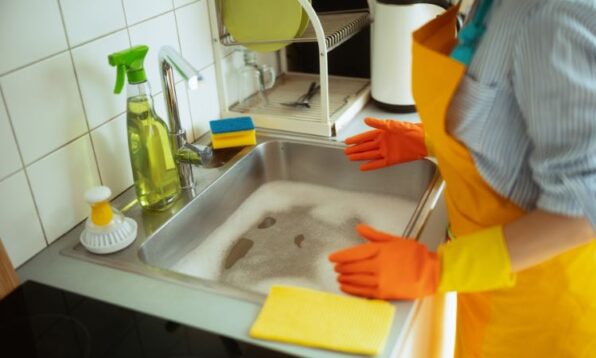
A slow or completely clogged drain is one of those annoyances that instantly ruins your mood. One minute you’re washing the dishes, the next you’re ankle-deep in murky water, wondering what you did to deserve this torture. But don’t lose hope. Most blockages are caused by very normal culprits like hair, soap scum, grease, and food residue, and they can be fixed at home. Here are some DIY ways to unclog your drain without any professional help.
1. The boiling water trick
Most people try boiling water once and give up. However, the secret is rounds. Grease and soap don’t always dissolve in one go. The “rounds” allow the heat to soften, loosen and flush residues progressively instead of shocking the pipe once and calling it a day. It works best for kitchen sinks with oily buildups.
How to do it:
- Boil a full kettle.
- Pour slowly in two or three stages.
- Wait 30-60 seconds between each pour.
Avoid this if your drain has plastic pipes that can’t take very high heat (if unsure, don’t use water straight off the boil).
2. Washing-up liquid and hot water
This mixture acts as a degreaser, breaking down oily build-up. Hot water then carries the loosened muck away. It is surprisingly effective and very underrated.
How to do it:
- Squirt a generous amount of washing-up liquid down the drain.
- Follow with very hot water.
- Let it sit for 10-15 minutes before flushing again.
3. Baking soda and vinegar

Yes, it’s clichéd, but the technique is what makes the difference. Most people let the fizz escape upwards, and that’s what you shouldn’t do. Plugging the drain forces the reaction down into the blockage, where you actually need it. The foam helps dislodge soap scum and mild organic build-up.
How to do it:
- Tip 1/2 cup of baking soda into the drain.
- Add 1/2 cup white vinegar slowly.
- Cover the drain with a plug or plate (this traps the fizz downward).
- Leave for 20-30 minutes.
- Flush with hot water.
4. The plunger trick with one small pro tip
A plunger is still one of the most powerful DIY tools, but only if you use it correctly. Using petroleum jelly around the rim of the plunger is the trick. It creates a much stronger seal, which means more pressure and faster blockage movement. Most people skip this, which is why they think plungers don’t work.
How to do it:
- Block any overflow holes (cover with a wet cloth).
- Add a bit of water to cover the plunger cup.
- Put a thin layer of petroleum jelly or moisturiser around the plunger rim.
- Plunge in firm, short bursts, about 15-20 pumps.
5. The coat-hanger hair hook
This one is especially good for bathroom sinks and shower drains because hair is often the villain here.
How to do it:
- Straighten a wire coat hanger.
- Create a small hook at one end.
- Remove the drain cover if possible.
- Gently fish around and pull the gunk upwards.
6. The P-trap clean
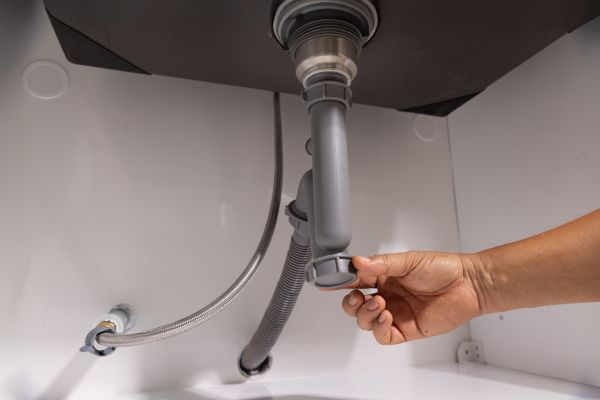
If the sink is still blocked and you’re comfortable with light DIY, P-trap clean is a good way to unclog your drain.
How to do it:
- Place a bucket under the U-shaped pipe.
- Unscrew the connectors by hand (usually finger-tight).
- Clear out sludge.
- Screw it back.
7. The wet-and-dry vacuum seal trick (if you have one)
If you have a wet and dry vacuum cleaner, this method is going to come in very handy. It can literally suck the blockage out in one go.
How to do it:
- Set the vacuum to liquid mode.
- Seal the drain opening with a wet cloth to make it airtight.
- Vacuum on full power for 10-15 seconds.
When NOT to DIY
Skip home remedies and call a professional if you notice:
- Water backing up into multiple drains
- Bad sewage smell throughout the home
- Gurgling toilets and sinks at the same time
- Flooding or leaks
These usually mean deeper pipe or mainline issues.
Simple ways to prevent clogs
Small maintenance tips can actually prevent clogs, and you won’t have to Google how to unclog a drain again anytime soon.
- Install a hair catcher in the shower. It costs little and saves a lot.
- Never pour oil down the sink (wipe pans with a tissue first).
- Once a week, flush the drain with hot water only.
- A “slow drain” is already a clogged drain in progress, so don’t wait until it fully stops.
Start with the gentlest methods, work your way up, and always avoid mixing harsh chemical cleaners (bleach plus anything else is a firm no).
Images Source
Featured Image Source
Related: How To Clean Dirty Rugs At Home: Don’t Let Expensive Dry-Cleaning Kill Your Diwali Vibe
FAQs
Q1. How long should I leave baking soda in the drain?
It’s recommended not to leave baking soda for more than an hour. The sweet spot is between 30 and 60 minutes.
Q2. Will boiling water remove hair from the drain?
Pouring hot water in the drain can loosen up the grease and soap holding the hair together in the drain.
Q3. What are the signs of a serious drain clog?
Some signs of a serious clog are gurgling sounds, standing water, a blocked drain with leaking water, and one blocked drain leading to another blockage.
Q4. What do I do if I can’t clear the clog?
If, after trying all these methods, your drain is still clogged, it’s time to call a professional for help.
Q5. What happens if you put too much baking soda in a drain?
Too much baking soda in the drain can lead to its clogging. Baking soda can become a solid mass, obstructing the passage of water.
- Share:
-

-

-